



The Return of Meaning
“To be or not to be” is the immortal phrase of the great Shakespeare, one that everyone interprets in their own way. As philosophers believe, when meaning is unclear, it is logical to return to the original intention. Audiences who wish to become living witnesses to a miracle unfolded before their eyes on the NAC stage on February 25–26, 2026, will have the opportunity to reflect on this theme. As a connoisseur and admirer of ballet, having seen this production in Montreal, I can guarantee a reign of absolute magic during the ballet performance of Hamlet, based on Shakespeare’s tragedy of the same name, set to music by John Gzowski.
The performance runs without intermission and lasts exactly one hundred minutes. A hundred hours will pass after the viewing, and then another hundred days, yet thoughtful spectators will continue searching for answers to the eternal question of existence. Theatre is a magical place. By addressing the spiritual world of the human being from the stage, it is meant to leave a mark on the hearts of its audience. The more professional and harmonious the team of creators and performers of any particular production, the deeper that mark will be — especially in a ballet production.
Graceful, perfectly polished movements, technically conscious choreographic phrases, and eloquent pantomimic mastery are harmoniously interwoven in the art of ballet, “the most MORAL of all the arts,” as P. I. Tchaikovsky considered it. Classical ballet and contemporary choreography are two opposites. Having seen several hundred ballet performances, I have always given my unconditional preference to the classics. But the avant-garde production of Hamlet is the brightest and deepest contemporary dance performance I have ever seen.
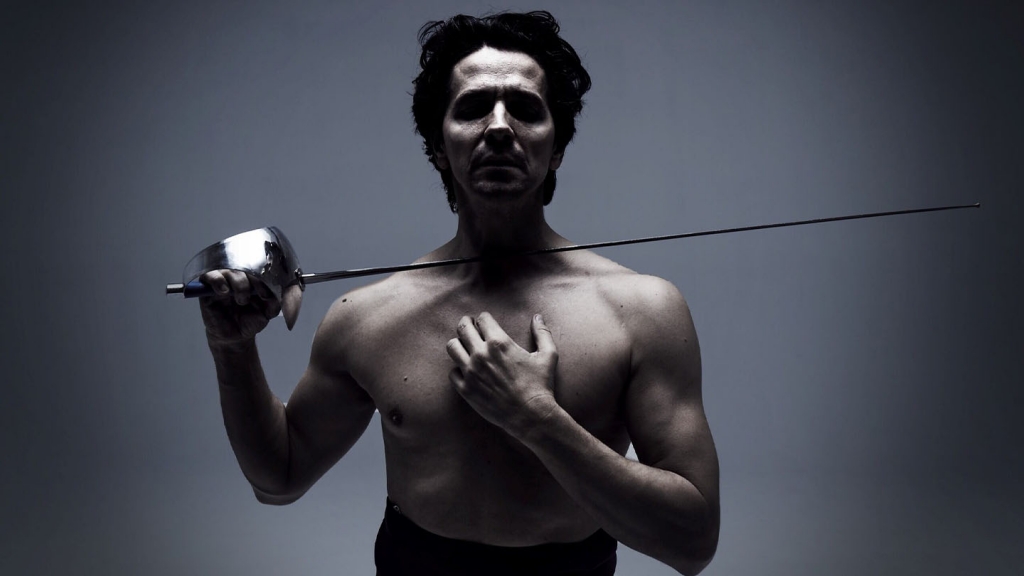
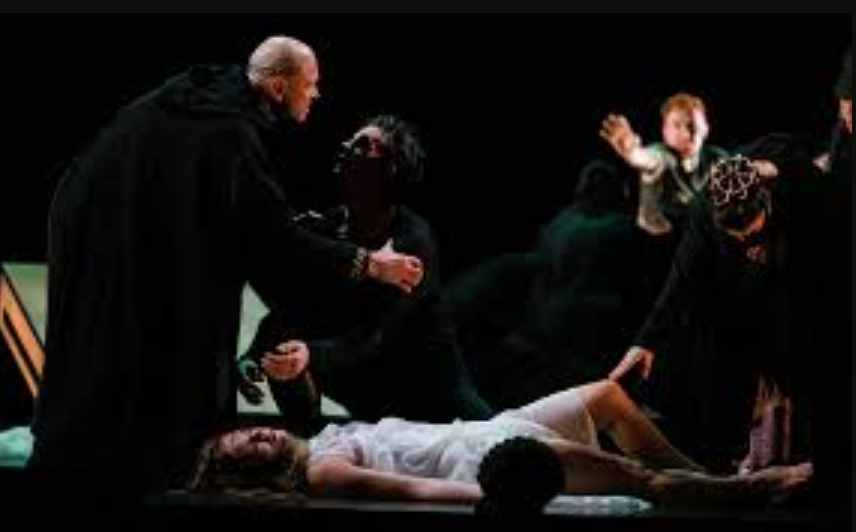
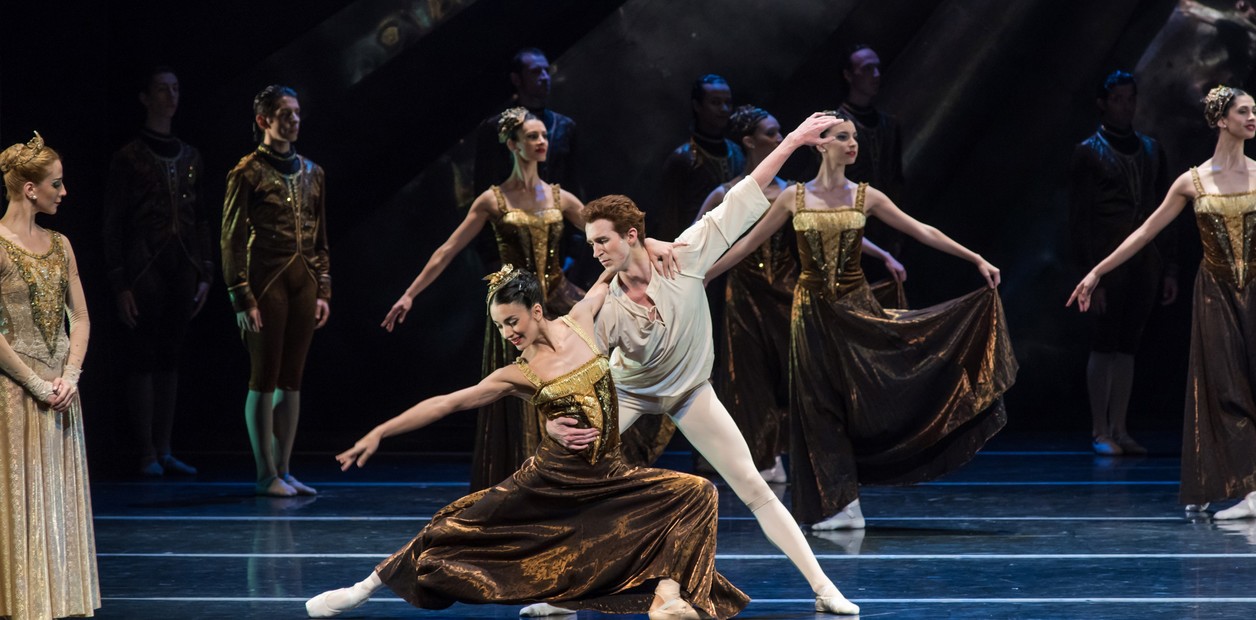
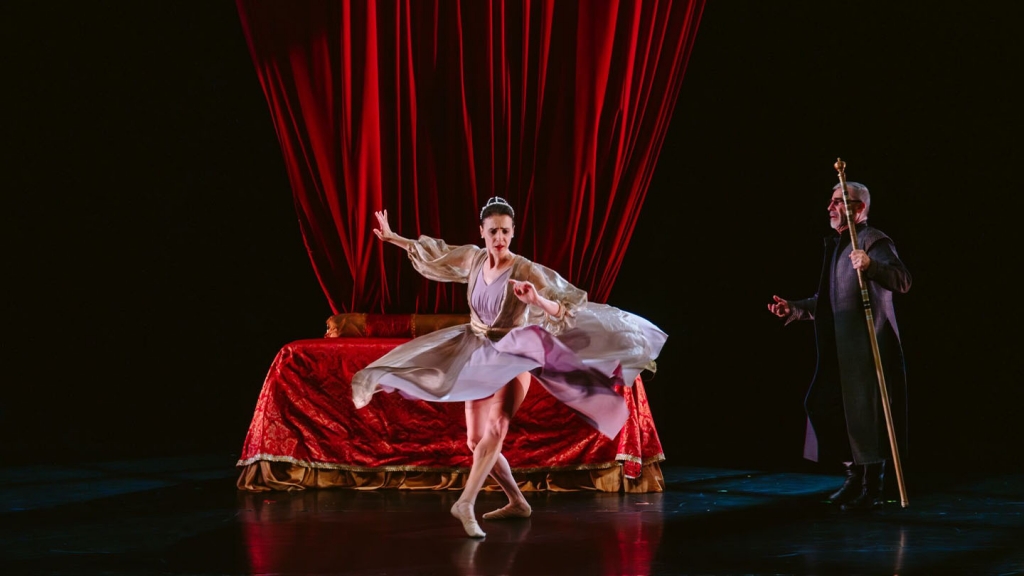
The choreographer and performer of the role of Hamlet is the star principal dancer of the National Ballet of Canada, French-Canadian Guillaume Côté, who has been trying his hand at choreography for several seasons already. Graceful physique, posture, musicality — these are the qualities that lend him nobility. But what elevates him to a higher level is the gift of a ballet creator, something far from common among dancers. Guillaume Côté’s interesting choreographic discoveries are impossible not to notice, even for an unprepared viewer. In Hamlet there are no pointe shoes and no dizzying fouettés — mostly, as ballet people joke, “rolling around on the floor.” Hamlet’s solo with the sword looks especially striking. In this production, the sword, like other props, is highly symbolic and has a powerful impact on the audience. Virtuoso swordsmanship suggests close collaboration with professional fencers. The white and crimson ribbons, contrasting in colour and originally attached to the swords in another scene, seem to transport the audience for a couple of minutes into the world of rhythmic gymnastics. The mirrors present on stage yet invisible are borrowed from circus performances. The wise and very unusual use of symbolic masks is utterly delightful. Personally, I am deeply impressed by the scene with Ophelia against the backdrop of a blue abyss-curtain, on the other side of which her stage partners, performing complex lifts together with her, remain invisible to the audience. The synthesis of several art forms in one performance is still called ballet. Despite the absence of live music, the production undoubtedly leaves an indelible impression and a deep mark on the souls of the audience. Much of the credit for this goes to the choreographer and the performers.
What makes it a masterpiece, however, is its impeccable stage design — sets, costumes, makeup, masks, lighting, sound, video, and props — and its creator, the internationally acclaimed artist from Quebec, Robert Lepage.
For several years, Robert Lepage headed the French Theatre at the National Arts Centre in Ottawa. In the mid-1990s, he founded his own multidisciplinary production company and later an interdisciplinary production centre. Director of several Cirque du Soleil productions, creator of a number of exhibitions, producer of numerous rock concerts and dramatic performances, he also made a major contribution to the art of cinema. The genius Robert Lepage also touched the art of opera. For example, his production of Das Rheingold enjoyed incredible success at the Metropolitan Opera in New York. Such versatility in a gifted creative personality compels one to take off one’s hat to him.
Lepage’s triumphant entry into the world of ballet is linked to his fruitful collaboration with Guillaume Côté. Robert Lepage is one of the greatest theatre directors of our time. Using new technologies, he constantly pushes the boundaries of theatrical performance — and fairy tale becomes reality, the impossible becomes possible. Even someone who does not know much about ballet will not remain indifferent to a production touched by Robert Lepage.
Author: Marina Kochetova