
From Farm to Checkout: Canada to Invest More Than $3 Billion in Food Security
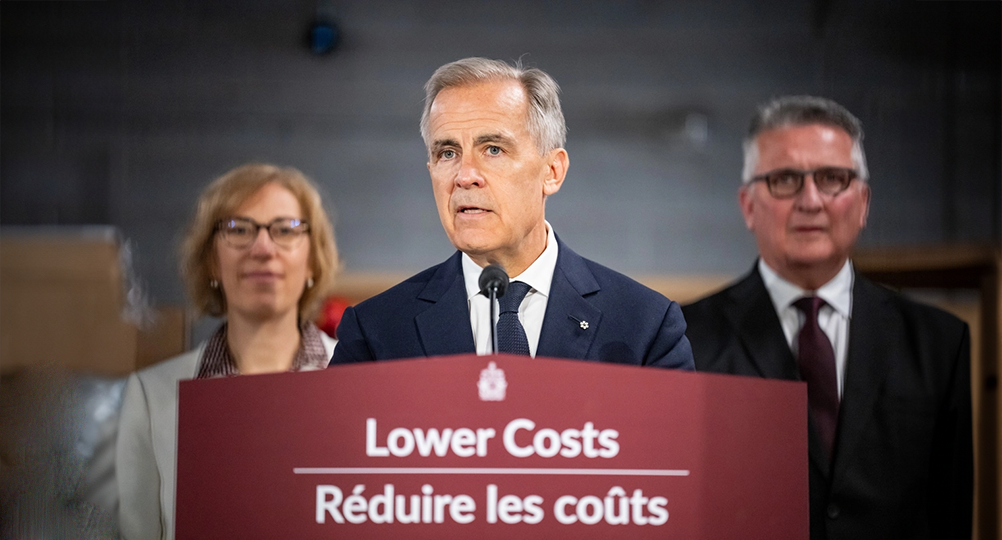
The Canadian government has introduced the country’s first National Food Security Strategy. Prime Minister Mark Carney says investments exceeding $3 billion are intended to strengthen retail competition, increase domestic food production and processing, and eventually help restrain rising grocery prices.
A central part of the plan is a $1-billion fund for food infrastructure. Over the next decade, the government intends to expand existing wholesale terminals, begin building two new terminals and establish approximately 40 commercial food hubs. These facilities should make it easier for independent grocers to purchase directly from farmers and processors instead of relying on the largest retail chains.
Competition is a major concern because five companies control roughly three-quarters of Canada’s grocery market. Nearly $130 million will therefore be provided to the Competition Bureau and Competition Tribunal to investigate and combat anti-competitive business practices.
Another $1 billion will be made available through Farm Credit Canada to help expand food production and processing. The strategy also includes $150 million to help small and medium-sized businesses modernize equipment and $100 million for innovative agri-food projects.
The government will invest $750 million in greenhouses, vertical farms and other controlled environments capable of producing fruits and vegetables throughout the year. This is particularly important in a country with a short growing season and a heavy reliance on imported fresh produce.
Statistics Canada reported that grocery prices in April 2026 were 3.8% higher than a year earlier. Canada’s Food Price Report estimated that a family of four could spend about $17,572 on food in 2026—almost $1,000 more than in the previous year.
The strategy also calls for faster approval of seeds, animal feed, fertilizers and veterinary products, along with fewer barriers to interprovincial food trade.
Economists caution, however, that consumers should not expect an immediate drop in prices. Food costs are still affected by weather, climate change, fuel prices, international conflicts and trade restrictions. The plan’s first significant results may therefore be seen not in grocery receipts over the next few months, but in the resilience of Canada’s food system over the coming years.