


WHAT IS OUR LIFE? — A GAME!
Alexander Drouz’s Secret Methodology for Finding the Right Answers
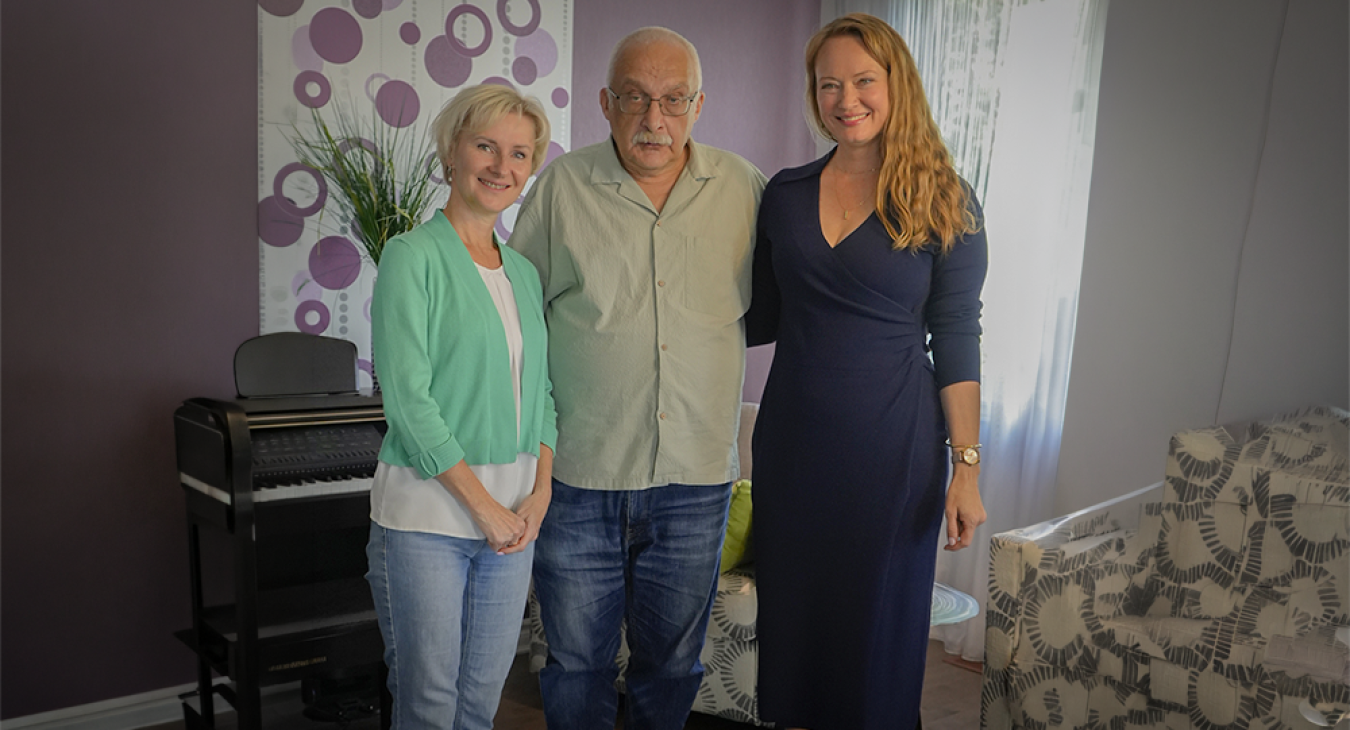
Recently, on September 7, Ottawa welcomed one of the greatest players in the world of intellectual games — Alexander Drouz, winner of seven Crystal Owls, a Master and multiple champion of the legendary game What? Where? When?
The legendary expert, a hero of our childhood whom we remember from black-and-white television, not only played the Power of Thought quiz with us, but also conducted an inspiring workshop where he shared his secrets for finding the correct answers to tricky quiz questions.
Our team, Lords of the Mind, attended the master class almost in full strength — and at the very next game, after applying Drouz’s methods, we became the winners.
So what exactly is the magic of Drouz?
According to him, every properly constructed question already contains everything you need to find the answer. You simply have to see the connections and discover the associations that lead you in the right direction.
Simple questions require one logical step, difficult ones require two or three, while the trickiest may involve as many as five levels of associations. The main skill is learning how to build the chain of reasoning.
The first rule of Drouz is to determine the place and time in which the question is set. By default, assume the last 100–120 years and the countries of the former Soviet Union, unless the question indicates otherwise. This helps eliminate irrelevant possibilities.
The second rule is to use the “zero version”: look for the answer at the point where a phenomenon, event, or object first appeared. Very often, a question is connected precisely to the origin, invention, discovery, or first appearance of whatever is being discussed.
The third rule is to use associative thinking. If the question is about Russian literature, think of Pushkin; if it is about English literature, think of Shakespeare. France is often associated with fashion and cuisine, Japan with technology and tradition, and Italy with art and design. Such associations can often lead to the correct answer.
The fourth rule is to turn the unfamiliar into something familiar. If the question contains foreign terms, translate them. A Russian translation of the wording can often reveal the meaning of the question and make the solution obvious.
The fifth rule, especially important for team captains, is this: the first version is often the correct one.
The sixth rule: the simpler and more obvious the explanation, the more likely it is to be correct. This is essentially an application of the classic principle known as Occam’s razor.
And finally, Alexander Drouz’s last commandment: all the previous rules are not dogma, but guidelines and tools for developing the mind.
The key to victory is to think independently, creatively, and with pleasure. After all, Power of Thought is not just a game. It is a training ground for intuition, logic, and creativity.
And the master’s main principle sounds like this:
“What is our life? A game! Play — and win!”
Over the four years of its existence, the Power of Thought quiz has become one of Ottawa’s major cultural and social events. In its warm and friendly atmosphere, Russian-speaking residents of Ottawa and Gatineau come together — people of different professions, ages, and interests united by their love of knowledge.
The game has long gone beyond being just entertainment. It has become a meeting place for some of the smartest, most knowledgeable, and thoughtful people in the capital — the true “cream of society.”
If you want to broaden your social circle, make new friends, or build useful professional connections, Power of Thought is one of the best ways to do it. After all, this is a team game, which means you immediately become part of a group of like-minded people united by common goals, curiosity, and a spirit of competition.
We sincerely thank Sergey Davydov for organizing the meetings with Alexander Drouz and for developing the Power of Thought game in Ottawa.
Thanks to initiatives like these, our city becomes smarter, friendlier, and more vibrant.
Watch the full interview with Alexander Drouz on the Nasha Ottawa channel: nashaottawa.ca/drouz
Recorded from the Master’s words by:
Kamila Dekhkhanbaeva and Yuri Natchetoi