
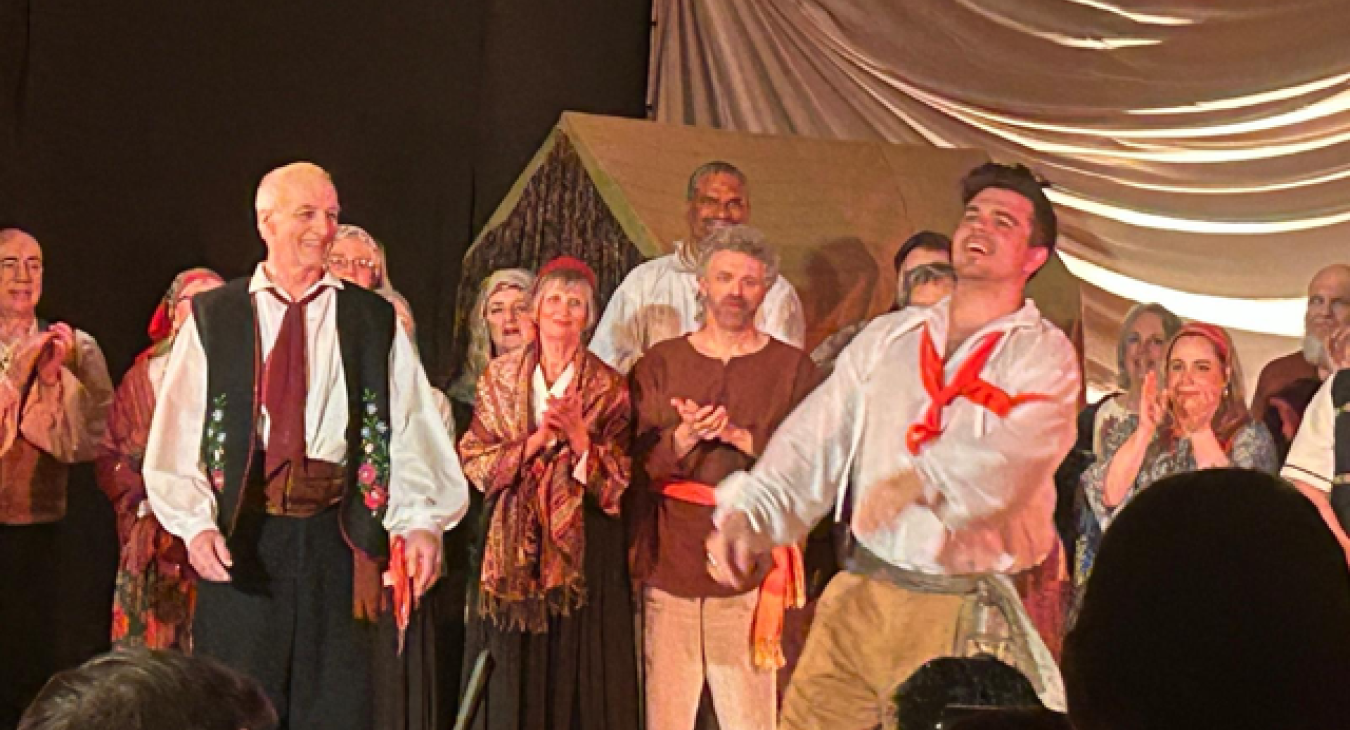
How Opera Roles Are Created
Creative people — those who are constantly searching — often have a more difficult life than those who spend their time looking for someone to blame. Creative individuals are always engaged in an active search. They tirelessly seek new ways to delight and inspire their audiences. To perform Russian opera with quality and authenticity, foreign artists must invest a great deal of time and effort.
Russian opera is one of the youngest among its European sisters. For a long time, music critics distinguished only three main styles, both in composition and performance: Italian, German, and French. Russian opera developed a different style, characterized by a strong desire to connect music closely with the spoken word. Musical declamation — recitative — also plays an important role.
If a performer does not speak Russian, taking on a Russian opera is an exceptionally difficult task. Singers are expected not only to perform their parts with vocal precision and pronounce Russian words clearly, but also to place logical accents correctly. Every soloist must reflect on the emotional and physical character of a particular people, to capture the tone of their soul and the tone of their gestures. Most importantly, the performer must convey the truth of emotion accurately. There cannot be two different truths of feeling, because genuine emotion is obvious and tangible.
Creating a stage character is a subtle process. I will try to lift the curtain slightly on the mystery of how an opera singer creates a role, since this year I was involved in a project by the Canadian company Opera Lyra as a linguistic consultant.
There is always a foundation from which the creative process begins. Through conscious effort of mind and will, every actor must develop a clear understanding of the work they have undertaken. The process begins with what is known as a read-through. First of all, the performer must thoroughly learn all the words of the libretto. If the language is foreign, this stage naturally takes considerably longer.
At the same time, the performer studies the musical score, thinks through every action of the character, and examines the character’s relationships with the other figures in the work. This process becomes truly effective only when the artist succeeds in sensing the atmosphere of the historical period and social environment. At the next stage, the performer can begin polishing the nuances and memorizing the role.
Intellectual effort alone is not enough. A stage arrives when the imagination must become fully engaged — the ability to see the character’s overall outward appearance and then recognize its distinctive details. Facial expression, posture, gesture... The goal is that from the very first appearance of the character on stage, the audience should immediately sense who that person is. Any stage image can be truthful and effective only to the extent that it convinces the audience.
Gesture is the soul of stage creativity. The slightest movement of the face, eyebrows, or eyes is itself a gesture. Behind every stage gesture there must be an inner movement of the soul. Otherwise, the character will not become alive or artistically meaningful and will remain nothing more than ordinary facial expression. Correctly chosen stage makeup adds further expressiveness to gestures. But that comes immediately before the performance...
Thus, during staging rehearsals, after carefully studying the score and deeply experiencing the entire range of the character’s emotions, the opera singer meticulously develops intonations and gestures. This is the process of polishing the role.
But polishing is a process, and the character is still not completely finished. It continues to mature for a long time. That is why practice is essential — it helps the performer truly inhabit the role. One must be responsible, thoughtful, disciplined, and capable of sustained hard work. All these qualities, multiplied by talent, create the very miracle for which audiences come to the theatre.
In addition to everything described above, each rehearsal requires the introduction of new details that help deepen the emotional experience even further. The ability to discover new colours and add them to the palette of one’s creativity in vivid and expressive strokes helped the English-speaking singers accomplish an extraordinarily difficult task. Their performance in Sergei Rachmaninoff’s one-act opera Aleko left an unforgettable impression on the audience.
Art is an eternal movement forward, a tireless pursuit of new and ever more powerful impressions. For performers, it is so important never to repeat themselves in their roles, while for audiences it is important to experience an uninterrupted emotional journey and to understand how much work has gone into the creation of every role.
Marina Kotchetova